
One supply, multiple tenants
A building electricity bill does not explain how much each business used. Submeters assigned to individual units make that allocation clearer. Managers see their meters together, while tenants access only their allocated units and tenancy periods. The approach suits offices, business parks, retail units and properties with separately let spaces.
How is the statement amount calculated?
The starting reading is subtracted from the verified closing reading. Consumption in kWh is multiplied by the recorded rate. For example, 1,426 kWh minus 1,000 kWh gives 426 kWh; at PLN 1.10/kWh net, the energy amount is PLN 468.60 net. This illustration excludes taxes and additional charges. A statement supports billing; it is not an automatically issued invoice.
Changing tenants without mixing records
Record a confirmed reading and handover date when a tenancy changes. The new tenant receives access to their own period, and earlier reports retain the correct recipient. Managers assign tenants to meters provisioned by the administrator. Separate permissions reduce the risk of sharing another tenant’s data in a combined spreadsheet.
What do we need for a quotation?
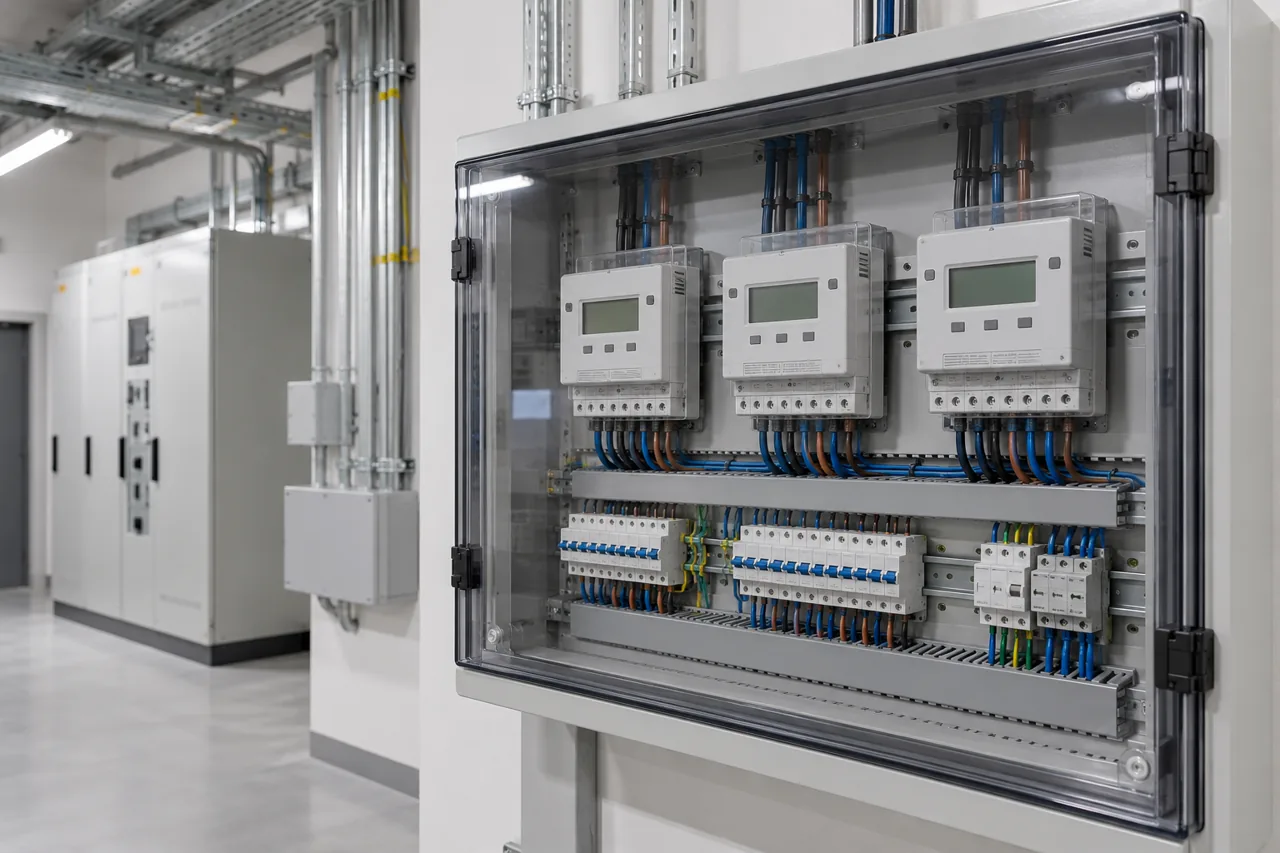
Send the number of units, meter models, distribution-board photographs and your current billing process. We agree connectivity, reading methods, installation and support. A missing reading remains missing data; a forecast does not replace a measured value for billing. Automation starts after meter assignments, recipients and the first statement have been checked.
Your questions answered
Can existing meters be retained?
Yes, where their interface, condition and intended use support the required reading. Compatibility is confirmed for the specific model.
Does a tenant need a password?
The tenant portal uses a one-time email or SMS code. SMS codes are valid for no more than three minutes. Access requires an account and meter assignment beforehand.